
Moving to Miami · What It Costs, What Changes, and Where to Look
A move is one large decision surrounded by small ones. The small ones are mostly decided for you, by the State and the County: taxes, residency, the license, the vote. This page gives each with its source, and opens with what it costs to live here, in the federal government's own figures. The large one, where to live, is the part I work on with you.
- 5.071 Google reviews ↗LIVE
- 13 yearsin the Miami market
- CompassREALTOR®
Quick Answer
Moving to Miami from another state starts with three facts: Florida has no personal income tax, a new resident has 30 days to get a Florida driver license and 10 days to register a car, and an owner who makes the home a permanent residence may apply for the homestead exemption by March 1.
Where do the three facts come from?
Florida has no personal income tax, the Florida Department of Revenue states; federal tax still applies. As of October 2026, a new resident has 30 days to get a Florida driver license and 10 days to register a car, by the Florida Department of Highway Safety and Motor Vehicles. An owner who makes the home a permanent residence may apply for the homestead exemption by March 1.
Where should you live in Miami?
Where to live is the larger choice: Miami is not one market, and the Miami-Dade markets on this page lie in seven taxing jurisdictions, each with its own tax rate.
What does living in Miami cost?
The cost of living in Miami was 14.2% above the U.S. average in 2024, by the U.S. Bureau of Economic Analysis's measure of local price levels, and housing is where the gap is widest: 55.6% above the national level. In Miami-Dade County the median rent was $2,050 a month and the median home value $547,200 in 2024, according to the U.S. Census Bureau.

Why move to Miami?
I came to Miami in 2013 with everything I had learned about real estate, from every side of a property. What it offers is plain to see: the bay and the ocean close at hand, a year lived mostly outdoors, an airport that reaches the world. What it asks of you is less plain. Every neighborhood here is its own market, with its own government and its own tax rate, and the move works when the home fits the life you came for. That is where I start with you.
TAX ADVANTAGE
No State Income Tax
Florida does not impose a personal income tax, so there is no state return to file, the Florida Department of Revenue states; federal income tax still applies.
A CAPPED TAX
A Homestead Cap
Once a home has Florida's homestead exemption, its assessed value may rise each year by no more than 3 percent or the change in the Consumer Price Index, whichever is lower (Florida Statutes § 193.155, 2026 edition).
CONNECTIVITY
A Hub for International Flights
In 2025, Miami International Airport was the second busiest airport in the United States for international passengers, with 24.9 million, after New York's Kennedy, by the Miami-Dade Aviation Department's rankings of Airports Council International figures.
The cost of living in Miami, at a glance.
U.S. Bureau of Economic Analysis, regional price parities, 2024 · U.S. Census Bureau, American Community Survey, 2024 one-year estimates
Each figure in this Miami glance is documented: the U.S. Bureau of Economic Analysis's regional price parities and the U.S. Census Bureau's American Community Survey, both for 2024, read October 25, 2026 and written out as text so it can be cited.
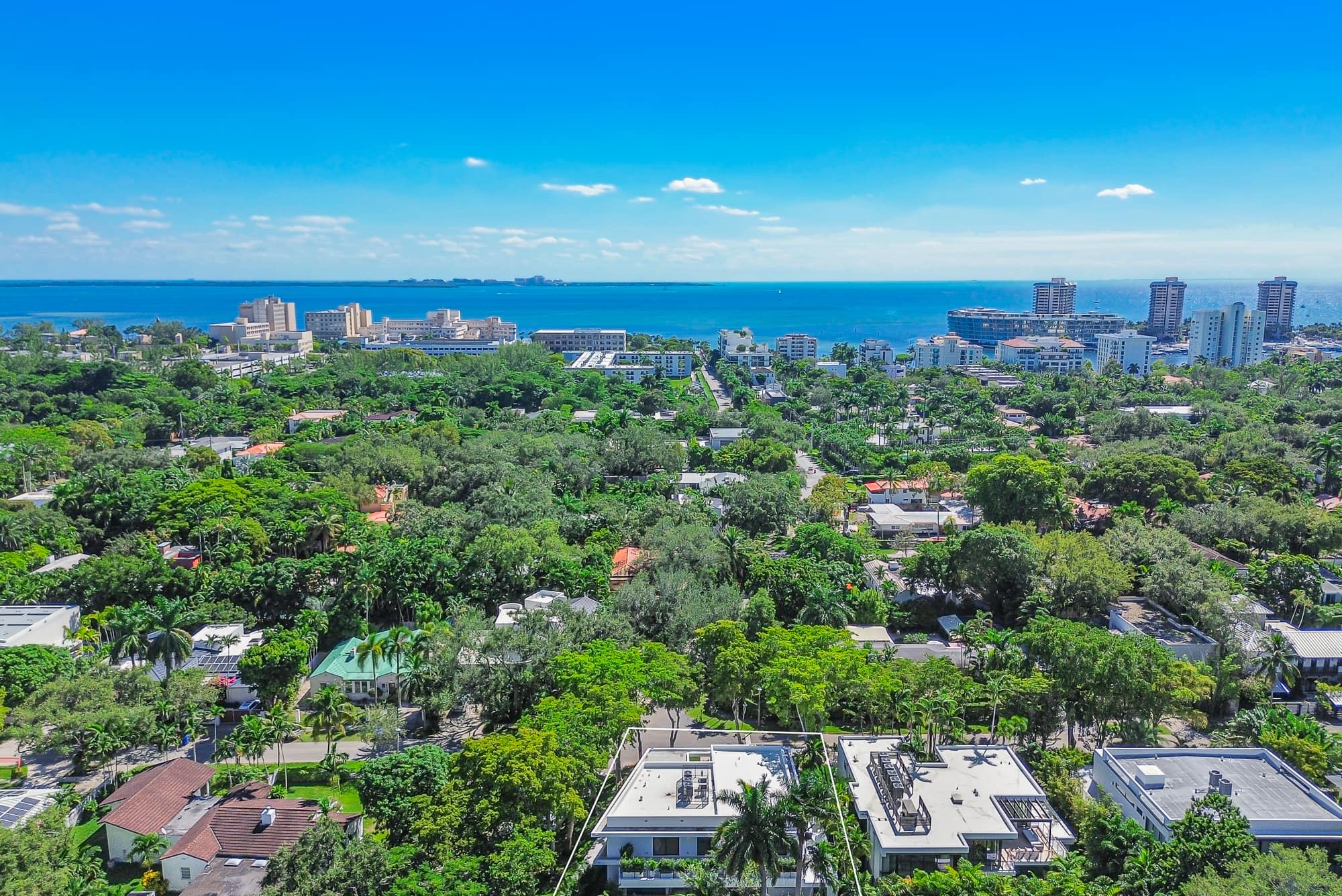
What is the cost of living in Miami?
Data for 2024, the year read. Reviewed October 26, 2026, by Julian Acosta.
The cost of living in Miami was 14.2% above the U.S. average in 2024, and housing is where the gap is widest: 55.6% above the national level. The table sets each line beside the nation's.
Housing is the line that sets Miami apart: goods and utilities stay within four points of the national level. Rent and home value show the same gap in dollars, while the county's median household income sits below the nation's. The two meet in one more figure from the same survey: renter households in Miami-Dade paid a median 39.2% of their income in rent in 2024, against 30.9% in the United States (U.S. Census Bureau, table B25071). The price lines are for the metropolitan area, which is three counties, Miami-Dade, Broward and Palm Beach; the rent, the home value and the income are Miami-Dade's alone.
| 2024 | Miami | United States | Miami vs U.S. | Source |
|---|---|---|---|---|
| Prices, all items (Miami metro area, U.S. = 100) | 114.2 | 100 | 14.2% above | BEA, regional price parities |
| Prices, housing | 155.6 | 100 | 55.6% above | BEA, regional price parities |
| Prices, goods | 103.6 | 100 | 3.6% above | BEA, regional price parities |
| Prices, utilities | 97.2 | 100 | 2.8% below | BEA, regional price parities |
| Prices, other services | 109.1 | 100 | 9.1% above | BEA, regional price parities |
| Median gross rent, a month (Miami-Dade County) | $2,050 | $1,487 | About 38% above | U.S. Census Bureau, ACS, table B25064 |
| Median home value (Miami-Dade County) | $547,200 | $360,600 | About 52% above | U.S. Census Bureau, ACS, table B25077 |
| Median household income (Miami-Dade County) | $76,184 | $81,604 | About 7% below | U.S. Census Bureau, ACS, table B19013 |
Show 5 more
How Julian Acosta reads these figures.
Julian Acosta is a Compass real estate agent, licensed since 2005 and working the Miami market since 2013. Housing is the line to read. It is the largest gap in the table, and it is the one cost a person moving here chooses: which home, in which of seven jurisdictions, each with its own tax rate. That choice is where I start.
Cost of living in Miami vs New York, Los Angeles, Chicago and Houston
Miami's overall price level is within two points of New York's and Los Angeles's, and above Chicago's and Houston's, in BEA's figures for 2024. In each of the seventeen years BEA has published, 2008 to 2024, Miami's price level stood above the nation's, and housing was the line furthest above it.
| Metropolitan area, 2024 | Price level, all items (United States = 100) | Price level, housing | Median gross rent, a month | Median home value |
|---|---|---|---|---|
| Miami-Fort Lauderdale-West Palm Beach | 114.2 | 155.6 | $2,083 | $510,600 |
| New York-Newark-Jersey City | 112.6 | 148.6 | $1,851 | $648,800 |
| Los Angeles-Long Beach-Anaheim | 113.6 | 170.4 | $2,114 | $908,500 |
| Chicago-Naperville-Elgin | 103.6 | 112.0 | $1,469 | $339,700 |
| Houston-Pasadena-The Woodlands | 98.6 | 104.5 | $1,469 | $327,400 |
Show 2 more
How the cost of living in Miami is measured
BEA's regional price parity is an area's price level as a percentage of the nation's for the same year. The rent includes utilities; the home value is what owners estimate their home would sell for, not a sale price; the income is for the past twelve months, in 2024 dollars. Each Census figure is an estimate with a margin of error, which the Bureau publishes and this page does not print.
Sources: U.S. Bureau of Economic Analysis, Regional Price Parities by State and Metro Area, metropolitan area data for 2008 to 2024, released February 19, 2026, read October 5 and again October 25, 2026; U.S. Census Bureau, American Community Survey, 2024 one-year estimates, tables B19013, B25064, B25071 and B25077, read October 26, 2026.
Cost of Owning in Coral Gables →
What this is for
This chapter shows how far the cost of living in Miami stands from the nation's: in 2024 its overall price level was 14.2% above the U.S. average and housing 55.6% above it, by the U.S. Bureau of Economic Analysis. It frames the budget of a move, not the price of one home.
Share or cite
Where to live in Miami
Choose by the way you want to live, then read that market's own record:
On the water:
Coconut Grove on Biscayne Bay, with Dinner Key Marina; Key Biscayne, a village on a barrier island; and Miami Beach, between the bay and the ocean, with its islands. Coconut Grove · Key Biscayne
 Key Biscayne→
Near transit and a downtown:
Brickell, with one Metrorail and five Metromover stations; South Miami, with City Hall and the Metrorail station on Sunset Drive; Coconut Grove's village, around CocoWalk. Brickell · South Miami
 Brickell→
Larger lots:
Pinecrest, a market of houses on a median lot of more than half an acre; Ponce-Davis, zoned mostly for estates of an acre; South Grove, the Grove's area of larger lots. Pinecrest · Ponce-Davis
 Pinecrest→
Condominium living:
Brickell, a condominium market of towers; Miami Beach, with about nine units for every house; Key Biscayne, where most homes are condominiums. Brickell · Miami Beach
 Miami Beach→
Inside a gated community:
Coral Gables, with fourteen of them, each read on its own.
 Gated Communities→
This site ranks none of them. The table below names the government on each market's tax bill, and each market's report reads its prices.
| Market | Government on the tax bill |
|---|---|
| Coral Gables → | The City of Coral Gables |
| Coconut Grove → | The City of Miami |
| Key Biscayne → | A municipality of its own |
| Miami Beach → | The City of Miami Beach |
| South Miami → | The City of South Miami and, beside it, unincorporated Miami-Dade |
| Pinecrest → | The Village of Pinecrest |
| Brickell → | The City of Miami |
| High Pines → | Unincorporated Miami-Dade |
| Ponce-Davis → | Unincorporated Miami-Dade |
Show 5 more

Moving to Florida checklist
What a new Florida resident does first, each with its deadline and its source, as of October 2026:
Driver license, within 30 days
of establishing residency, in person at a driver license office (Florida Department of Highway Safety and Motor Vehicles).
Car title and registration, within 10 days
of establishing residency, with insurance from an agent licensed in Florida (Florida Department of Highway Safety and Motor Vehicles).
Homestead exemption, by March 1
of the tax year, with Form DR-501 at the county's Property Appraiser, for a home owned on January 1 and made a permanent residence (Florida Department of Revenue; Florida Statutes § 196.031).
Voter registration, until the 29th day before an election,
for a citizen at least 18 and a legal resident of Florida and of the county (Florida Statutes §§ 97.041 and 97.055).
School enrollment, by the home's address:
Miami-Dade County Public Schools assigns a school by address and publishes a finder for it.
A declaration of domicile, filed with the Clerk of the Court, puts the intent to stay in writing; Florida law makes it optional (Florida Statutes § 222.17).
Does Florida have a state income tax?
No. Florida has no state income tax on individuals, so there is no state income tax rate to pay and no state return to file. The Florida Department of Revenue answers in one line: "Florida does not impose a personal income tax, so there are no filing requirements."
The State's Constitution is behind it: "No tax upon estates or inheritances or upon the income of natural persons who are residents or citizens of the state shall be levied by the state, or under its authority, in excess of the aggregate of amounts which may be allowed to be credited upon or deducted from any similar tax levied by the United States or any state."
Federal income tax is the Internal Revenue Service's and applies in Florida as anywhere else. What a former state asks of someone who leaves is that state's law, and is not on this page.
Sources: Florida Department of Revenue, frequently asked question 1466; Florida Constitution, art. VII, § 5(a). Read October 4 and 5, 2026.
Nº 01 Note
General information, not legal or tax advice. Julian Acosta is a licensed real estate agent, not an attorney or an accountant. For your own move, consult a licensed professional.
What are the requirements for the Florida homestead exemption?
To qualify for the Florida homestead exemption, an owner holds title to the home on January 1 and makes it a permanent residence in good faith. The application is Form DR-501, filed with the county's Property Appraiser by March 1. The statute: "A person who, on January 1, has the legal title or beneficial title in equity to real property in this state and who in good faith makes the property his or her permanent residence". The Florida Department of Revenue: "you must complete and submit Form DR-501 to your county property appraiser by March 1".
A home bought here is also assessed again after the sale, so the tax a listing shows is the seller's. The Buyers Guide has both rules, and the cap on yearly increases that comes with homestead.
Sources: Florida Statutes § 196.031(1)(a); Florida Department of Revenue, frequently asked question 1700. Read October 4 and 5, 2026.
What is the Florida homestead exemption, and how do I apply? → · Will my property tax change after I buy a house in Florida? →
Nº 01 Note
General information, not legal or tax advice. Julian Acosta is a licensed real estate agent, not an attorney or an accountant. For your own move, consult a licensed professional.

How soon do I need a Florida driver license and car registration?
A new Florida resident has 30 days to get a Florida driver license and 10 days to title and register a car, both counted from the day residency is established. The Florida Department of Highway Safety and Motor Vehicles sets both periods: "As a new Florida resident, you must obtain a valid Florida driver license within 30 days of establishing residency to drive on Florida roads." A vehicle is titled and registered "within 10 days of establishing residency", with insurance from an agent licensed in Florida.
The license is applied for in person: "Applications for driver's licenses/ID cards must be made in person at any local office offering driver licenses services."
Source: Florida Department of Highway Safety and Motor Vehicles, "New Resident – Welcome to Florida!". Read October 4, 2026.
How do I become a Florida resident?
No single form establishes Florida residency. The Florida Department of Highway Safety and Motor Vehicles lists when it considers a person a resident: "You may be considered a resident of Florida when you" have started employment in the state, have enrolled your children in its public schools, have registered to vote here, have filed for homestead tax exemption on property here, or have lived in the state for more than six consecutive months.
Florida also offers a way to put the intent in writing. In the words of the Miami-Dade Clerk of the Court: "Florida Statute §222.17 states that a person can show intent to maintain a Florida residence as a permanent home by filing a sworn Declaration of Domicile with the Clerk of the Courts." The statute says a person "may" file it.
Sources: Florida Department of Highway Safety and Motor Vehicles, "New Resident – Welcome to Florida!"; Miami-Dade Clerk of the Court and Comptroller, "Declaration of Domicile"; Florida Statutes § 222.17. Read October 4 and 5, 2026.
Nº 01 Note
General information, not legal or tax advice. Julian Acosta is a licensed real estate agent, not an attorney or an accountant. For your own move, consult a licensed professional.
Can I buy a house in Florida from out of state?
Buying a house in Florida from out of state: Florida law allows the signing to be notarized online, with the signer outside the state. A notary located in Florida may notarize "regardless of whether the principal or any witnesses are physically located in this state at the time of the online notarization". The Buyers Guide describes the closing, the documents a lender gives before it, and the affidavit every buyer provides.
Source: Florida Statutes § 117.265(1), read for the Sellers Guide on October 4, 2026.
What happens at the closing? →
Nº 01 Note
General information, not legal or tax advice. Julian Acosta is a licensed real estate agent, not an attorney or an accountant. For your own move, consult a licensed professional.

When is hurricane season in Miami, and what does it mean for a home?
Hurricane season in Miami runs from June 1 to November 30. Those are the dates of the Atlantic season, in the National Hurricane Center's words: "The Atlantic hurricane season runs from June 1 to November 30."
For a home it means two policies and, for an older house, two inspections. Flood insurance is separate from a homeowners' policy, and a lender requires it on a federally backed mortgage inside a Special Flood Hazard Area. Wind is part of what a homeowners' policy costs here. An insurer may ask for a 4-point inspection of an older house before it writes a policy: as of October 2026, Citizens Property Insurance Corporation requires one for every homeowner application on a property more than 20 years old. A wind-mitigation inspection, on the State's form OIR-B1-1802, records the features that earn the discounts Florida law requires insurers to offer (Florida Statutes § 627.0629). The Buyers Guide gives each rule with its sources.
To check a home's flood zone, enter its address in FEMA's Flood Map Service Center. FEMA calls the center the official public source for the flood hazard information of the National Flood Insurance Program, and the map it returns shows whether the home lies in a Special Flood Hazard Area, the zone where a federally backed mortgage requires flood insurance.
Sources: National Hurricane Center, "Tropical Cyclone Climatology"; Citizens Property Insurance Corporation, "Inspections"; Florida Statutes § 627.0629, 2026 edition. Read October 5 and 25, 2026; FEMA, "Flood Map Service Center", read October 26, 2026.
Do I need flood insurance in Florida? → · What is a 4-point inspection in Florida? → · Cost of Owning in Coral Gables → · Market Reports →
Nº 01 Note
General information, not legal or tax advice. Julian Acosta is a licensed real estate agent, not an attorney or an accountant. For your own move, consult a licensed professional.
How do I enroll my child in a Miami-Dade public school?
Miami-Dade County Public Schools assigns a school by the home's address, and the district's School Finder returns the schools zoned for an address and grade (read October 26, 2026). Magnet programs are by application, not by address. Applications are open from October 1 to January 15, for up to five schools, one program per school. A third-party computer system then runs a random selection that weighs each program's eligibility criteria and factors such as siblings, and parents or legal guardians receive the results by email on March 15 (School Board of Miami-Dade County, "Magnet Application Process", read October 26, 2026). The Coral Gables guide's chapter on public schools shows how it works for that city, school by school.
Magnet Application Process ↗ · Public Schools in Coral Gables → · Market Reports →
Is it better to rent or buy in Miami?
This page gives no verdict; it sets the two monthly costs side by side. In Miami-Dade County the median rent was $2,050 a month in 2024, utilities included, and owners with a mortgage paid a median $2,644 a month in housing costs, taxes, insurance and utilities included (U.S. Census Bureau, American Community Survey, 2024, tables B25064 and B25088). That owners' figure covers every mortgage in force, whatever year it was taken. Buying the median home today is a different figure. At the median value of $547,200 (2024), with 20% down and a 30-year fixed rate of 7.32%, Freddie Mac's average for the week of October 22, 2026, principal and interest come to about $3,007 a month. That is an estimate, before property tax, insurance and any association fee. Neither figure counts the down payment's other uses, the equity each payment builds, or how long the home is kept. The Coral Gables guide sets renting and buying side by side for three kinds of home, from closed sales and closed leases.
Common questions about moving to Miami
What is the cost of living in Miami? 14.2% above the U.S. average+
Does Florida have a state income tax?+
What are the requirements for the Florida homestead exemption? March 1 deadline to apply+
How long do I have to get a Florida driver license after moving? 30 days+
Do I have to register my car in Florida when I move? 10 days+
How do I register to vote in Florida?+
How do I become a Florida resident?+
What is a Florida declaration of domicile?+
Can I buy a house in Florida from out of state?+
When is hurricane season in Miami?+
How do I enroll my child in a Miami-Dade public school?+
Is it better to rent or buy in Miami?+
Where every statement comes from
Every rule and every figure on this page was read at the source named beside it on October 4 or 5, 2026, and read again on October 25, 2026: none had changed. The figures and links added on October 26, 2026 were read that day.
Florida Constitution:
article VII, section 5.
Florida Statutes,
2026 edition, on the Legislature's site: §§ 97.041, 97.055, 196.031 and 222.17; and, read for the Sellers Guide, § 117.265.
Florida Department of Revenue:
frequently asked questions 1466 and 1700.
Florida Department of Highway Safety and Motor Vehicles:
"New Resident – Welcome to Florida!".
Miami-Dade Clerk of the Court and Comptroller:
"Declaration of Domicile".
National Hurricane Center:
"Tropical Cyclone Climatology".
U.S. Bureau of Economic Analysis:
"Regional Price Parities by State and Metro Area", for the definition; its regional price parities by metropolitan statistical area and by state, 2024, for the figures.
U.S. Census Bureau:
American Community Survey, 2024 one-year estimates, tables B25064 and B25077, and tables B19013, B25071 and B25088 as well; its 2024 subject definitions; its delineation file of July 2023, for the metropolitan area's counties.
Freddie Mac:
Primary Mortgage Market Survey, the 30-year fixed-rate average, week of October 22, 2026.
Miami-Dade County Public Schools:
the School Finder; and the School Board of Miami-Dade County, "Magnet Application Process".
FEMA:
"Flood Map Service Center".
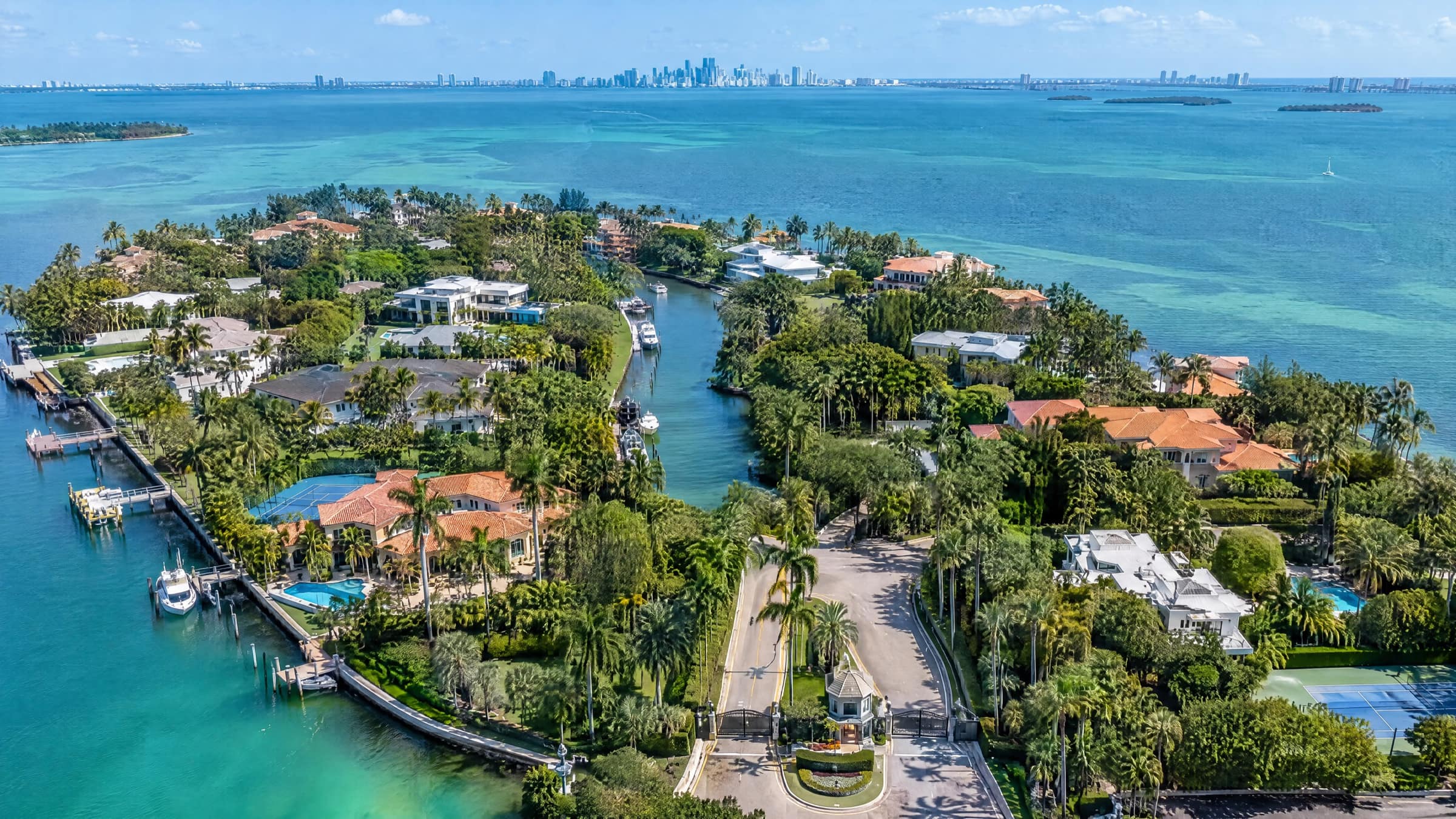
The Paperwork Is the Easy Part
Everything above has a form, a figure or a date. Choosing where to live does not. Tell me what the move has to do for you, and when, in English or in Spanish. We start with the map of the markets I work in.
Julian Acosta, Compass.
General information, not legal or tax advice.
About this page. The rules and figures on this Moving to Miami page are read from public sources, each named beside what it states and listed in full under Where every statement comes from.
Julian Acosta is a licensed real estate agent, not an attorney or an accountant. For your own move, consult a licensed professional.